
Category: Legal Translation
-
Untranslatable Words: A Universal Phenomenon
The concept of untranslatable words arises when a lexical item in one language cannot be directly rendered into another language without loss of meaning. Such terms are not limited to rare dialects or literary traditions; they appear across the world’s major languages. The German term “Schadenfreude”, denoting the experience of taking pleasure in the misfortune…
-
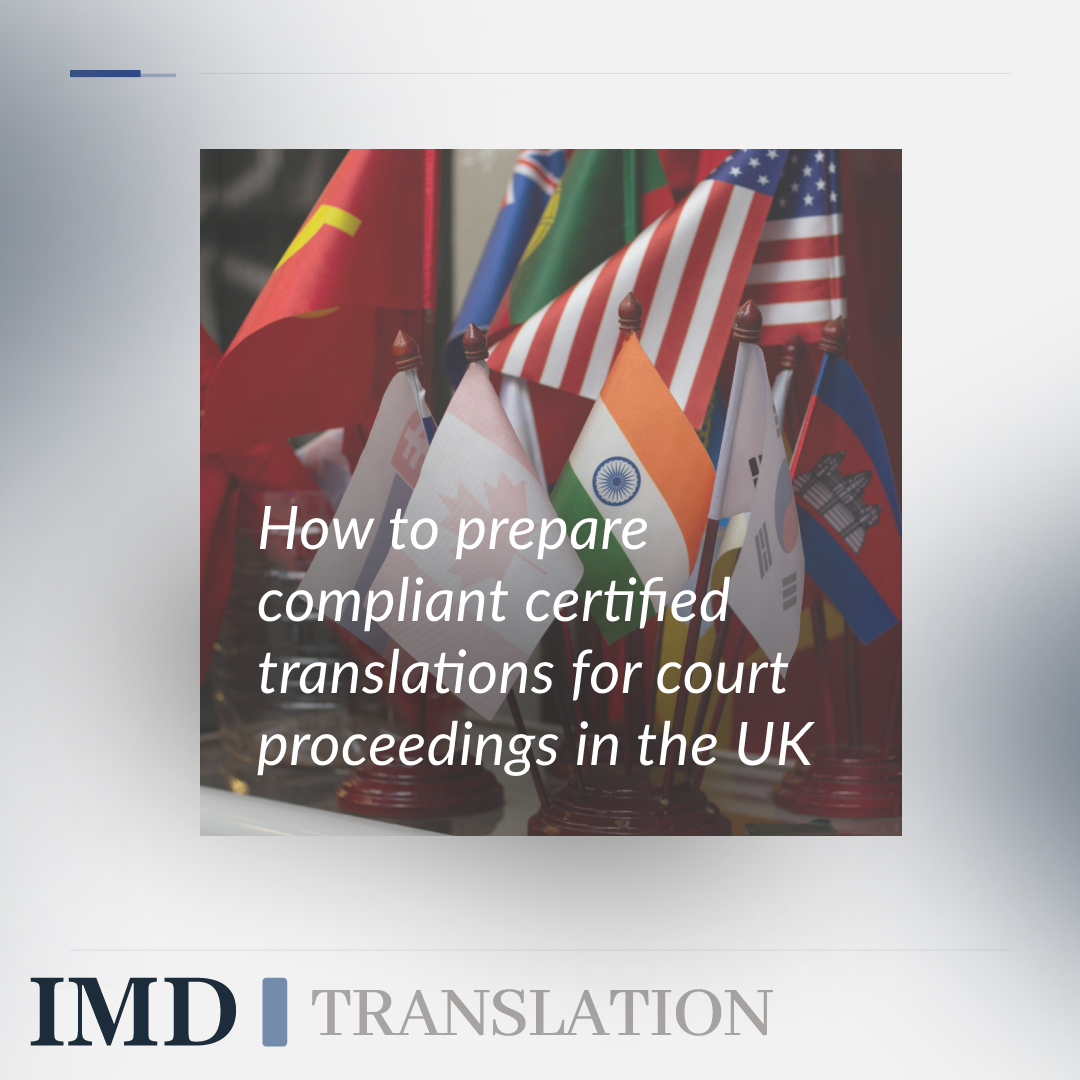
How to prepare compliant certified translations for court proceedings in the UK
Certified translations are required whenever parties put foreign-language material before a UK court. Recent amendments to the Civil Procedure Rules (CPR) and related Practice Directions clarify both how witness evidence must be prepared and what a compliant certification must contain. This note summarises the key requirements and sets out how IMD Translations delivers court-ready work.
-
When “Yes” and “No” Do Not Exist: Languages Beyond Affirmation and Negation
The words yes and no are often considered universal. Yet, in many languages, these direct equivalents do not exist, or they function differently from English. Instead of using a single lexical item for affirmation or negation, speakers employ echo-answers, verb repetition, or contextual phrasing. This phenomenon poses intriguing challenges for linguists and practical considerations for…
-

Translation Challenges: Amplifying Immigrant Voices in the UK
In the United Kingdom, immigrant voices – refugees, asylum seekers, migrants—often encounter translation challenges that extend beyond mere linguistic conversion. Such obstacles can distort stories, hinder access to essential services, and shape public perceptions. In this article, we address three themes: media representation, professional interpreting deficiencies, and the subtleties of cross-cultural qualitative research. Through academic…
-

Local Authority Translation in the UK: Connecting Communities and International Stakeholders
Translation supports governments in delivering public services, enforcing law, managing crises, and shaping diplomacy. It also ensures that people can access information in their own language. This article looks at how translation affects public life, using government-led case studies to explain its role in law, health, diplomacy, corporate regulation, and digital transformation.
-

Improving Patient Safety Through Medical Translation
Incorrect communication in healthcare can result in clinical errors, delays in treatment, and long-term injury. One notable example occurred in Florida, when an 18-year-old named Willie Ramirez was admitted to hospital in a comatose state. His Spanish-speaking family used the word “intoxicado”, which hospital staff interpreted as “intoxicated”. In fact, the family meant “poisoned” -…
-

Same Will, Different Rules? Dealing with Probate in the UK and Abroad
Probate documentation—which includes wills, grant applications, death certificates, and inheritance forms—often originates from diverse legal systems. In England and Wales, for example, applications under HM Courts & Tribunals Service require an official copy of any foreign will, accompanied by a precise English translation. Similarly, where a death certificate is issued abroad, applicants must provide translations…
-

Introducing LegalTranslation.ai – Free, Confidential Translations Designed for Solicitors
Most free translation tools store user input, sometimes indefinitely, to improve their services. That may be fine for the average user, but as regulated professionals we must ensure we do not compromise our clients’ personal or commercially sensitive data. Using those tools for legal documents — even as a “first draft” — can put your…
-

When a Word Costs Millions: Financial Translation Failures
Private equity and asset management firms operate across jurisdictions where legal, regulatory, and investor communications must be clearly understood in multiple languages. According to the Financial Conduct Authority (FCA), financial promotions must be “fair, clear and not misleading”—a standard that extends to translated material as well.
-

Bilingual Contracts and Legal Risk: Why Accurate Translation Is Critical
You don’t consider multilingual communication a frontline legal, medical, and financial priority yet? Nowhere is this more evident than in the drafting and execution of bilingual contracts. From cross-border inheritance disputes to international investment agreements, the clarity of legal documents across languages is critical. Yet, poor or imprecise translation remains a widespread risk—with potentially severe…